Event Recap: Wilmot Field Day 2026
.png)


Wilmot Field Day 2026 marked the eighth year of what has become Australia's premier regenerative agriculture event. Hosted at Wilmot near Ebor in the New England Highlands of NSW, hundreds of producers, agronomists, and industry professionals came together across two days for a program that covered healthy soils, adaptive grazing, resilient farm businesses, and the growing range of commercial opportunities available to forward-thinking producers
For Atlas Ag, the event was also a special milestone. We launched Atlas Grazing, our new grazing product, demonstrating its capabilities in the paddock during "Grazing meets tech" sessions in the event's program.
The Themes That Ran Across Both Days
The 2026 program brought together over 30 speakers across a broad mix of farm systems, sectors, and disciplines. Across all of it, a few ideas kept surfacing.
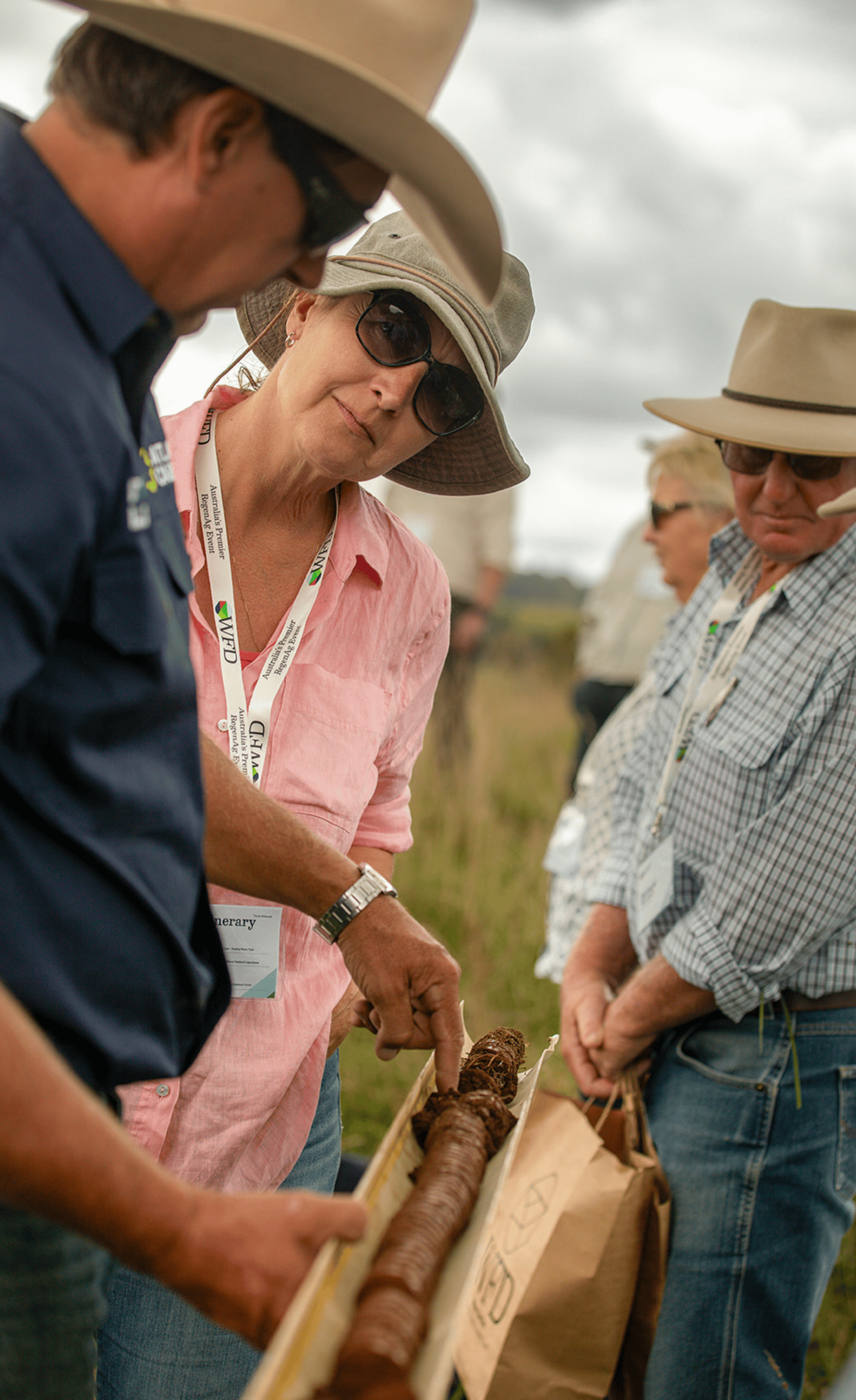
The first was that soil is the foundation of everything. Whether the conversation was about pasture productivity, food quality, carbon sequestration, or business resilience, it came back to what is happening below the surface.
The second was that data matters. Not just for its own sake, but because a business that understands its numbers makes better decisions, faster, and with less stress.
The third was that the opportunities available to producers who manage their land well are growing. Carbon markets, biodiversity credits, premium supply chains, and new financing options are all moving in the same direction.
Opening the event, Alasdair MacLeod, Executive Chairman of Macdoch Australia, set the tone well. He reflected on how far the regenerative agriculture conversation has come since Wilmot Field Day began, and on the opportunity for the current generation of land stewards to become genuine agents of change for a more sustainable food system.
What Speakers Brought to the Room
Dr Allen Williams of Understanding Ag opened Day 1 with a session on diversity, disruption, and compounding. Drawing from his work across more than 15 million hectares of farmland, Allen gave producers a practical framework for reading their own paddocks and making more responsive management decisions. He challenged the room to move beyond prescriptive grazing and start treating their land as an adaptive system. His core argument was that getting comfortable is where improvement stops.
On Day 2, Grant Sims and Joel Williams co-hosted a hands-on session on soil health, plant nutrition, and multi-enterprise systems. Joel translated the science of biologicals, foliar nutrition, and plant diversity into practical explanations producers could apply in their own context. Grant grounded it in the transformation of his family's mixed farming enterprise in northern Victoria, including the commercial pathways that opened as a result. The combination of science and real-world application made it one of the more practical sessions across the two days.
Beyond the Farmgate
Atlas Ag hosted a panel session, Beyond the Farmgate: Insights Shaping Resilient Ag Businesses, that brought together Amanda Young from Atlas Ag alongside producers Debbie Hatte, Suzanne Currie, Annabel Sides, and Melanie Ballantine of New Hope Group.

What stood out was the range of experience in the room. Several panellists had come into grazing from other industries, and that outside perspective had shaped how they approach decisions on land, livestock, and business. The conversation covered building resilience across economic, environmental, and personal dimensions, how lessons from other sectors apply to managing complexity on farm, and what it took to feel confident exploring options like soil carbon projects and alternative income streams.
A recurring theme was that digitising your farm processes and records opens doors. It gives you a credible position when talking to a bank, a buyer, or a carbon project provider. It also gives the whole team a shared foundation for making decisions together.
Launching Atlas Grazing

Wilmot Field Day 2026 was where we officially launched Atlas Grazing to the public. Built on over a decade of data and experience from Maia Grazing, Atlas Grazing is our next-generation platform for managing your land, livestock, and operations with confidence.
The platform gives producers real-time yield calculations in 10-minute intervals, paddock-level graze event records, livestock ratings that update as animals gain weight, feed estimates, and the ability to connect daily grazing decisions back to gross margin. For producers who have been utilising MaiaGrazing, their data carries forward. For new users, the platform starts building that picture from day one.
The goal is not to replace decisions. It is to make producers more confident in the ones they are already making. A consistent habit of recording what you see, and what the mob actually takes out, builds the feedback loop that calibrates your judgement over time.
Grazing Meets Tech: The Paddock Walk Sessions
Bart Davidson, Atlas Ag's Chief Grazing Officer, hosted Grazing Meets Tech paddock sessions across both days of the event. Bart has been involved in Wilmot's journey since the early 2010s, and knows the paddocks, the numbers, and the decisions that built the business into what it is today.

The framework he walked attendees through is the same one the Wilmot management team uses every day. Rainfall is the deposit. Grazing is the withdrawal. Recovery is how you compound both into more grass. Within any graze, four metrics tell the story: recovery, density, duration, and yield.
What made this year's sessions different was Atlas Grazing running live in the paddock alongside the discussion. As the group worked through a practical feed estimation exercise, the app showed real graze data from the paddock they were standing in. Attendees could see how long ago the paddock was last grazed, how many stock days the previous mob had taken out, and what the rolling yield history looked like across seasons. When the group estimated the stock days per hectare in front of them, the app validated the number in seconds.

Debbie Hatte, who works in the Atlas Grazing customer success team and is also a beef producer herself, brought the practical reality of it back to ground level:
"It doesn't matter if you're wrong at first. When the mob comes out, the app tells you what they actually took. That's your feedback loop. Do it a handful of times and you'll become calibrated."
For producers who have never done formal feed budgeting, that feedback loop is where confidence is built. For businesses already tracking stock days and recovery periods, Atlas Grazing connects those records to livestock performance and operational planning across the whole farm.
Reflections
Two days, 30-plus sessions, and a lot of time with like-minded producers. Wilmot Field Day 2026 reinforced something we see consistently in the businesses we work with. The farms that make decisions with the least stress are the ones with a like-minded approach for what is happening on their country. Not a perfect system; A common language, backed by consistent data that every person in the team understands and trusts.
That is what Atlas Grazing was built to support.
Want to see how Atlas Grazing works for your property? Request a demo or start a 30-day free trial today
.png)
.png)

.png)


