Advantages and Disadvantages of Grazing Systems
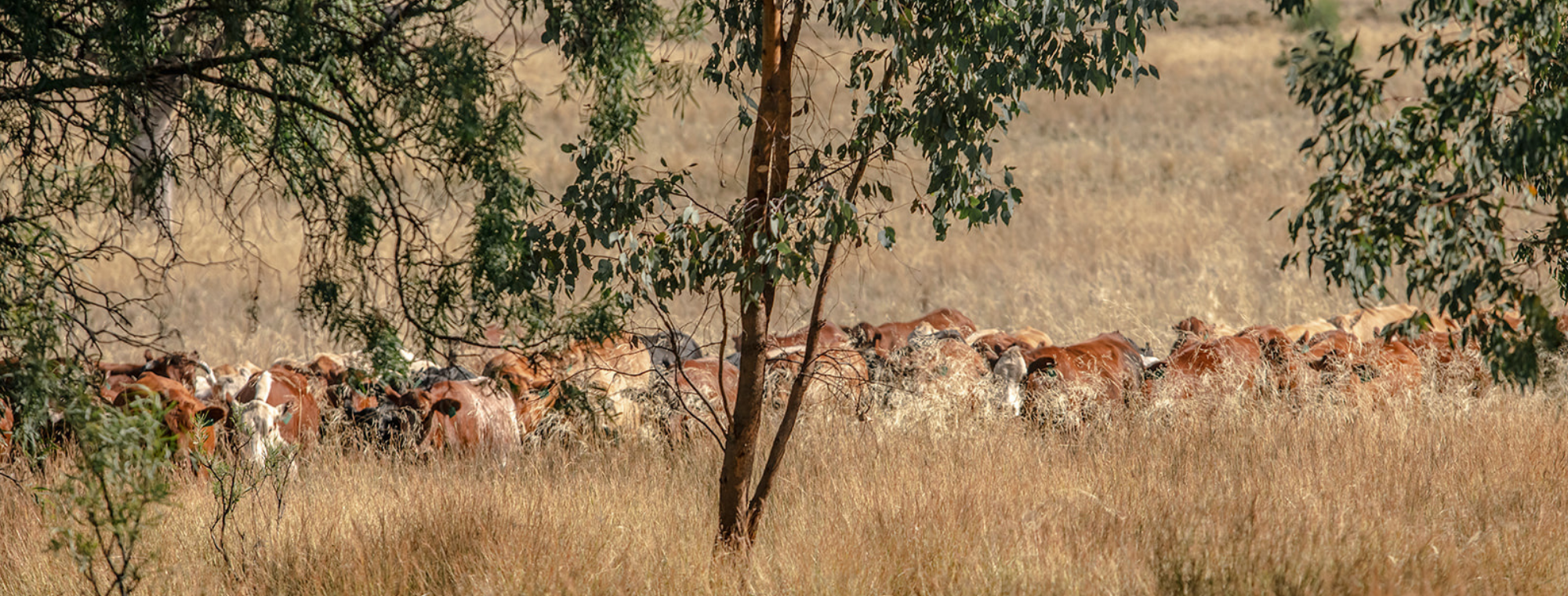


Choosing a grazing system is one of the most important management decisions a grazier makes.
How stock move across paddocks influences pasture recovery, ground cover, labour demand, infrastructure cost and long-term profitability. There is no single “best” system. Each approach carries trade-offs.
Some producers run one system across the entire property. Others adapt different systems to suit land type, rainfall pattern or labour capacity.
This guide outlines the practical advantages and disadvantages of four common grazing systems so you can assess what fits your operation.
Continuous Grazing
Continuous grazing is the simplest system. Livestock remain in the same paddock for extended periods, often year-round.
Its main appeal is simplicity. Infrastructure requirements are low, labour is minimal and stock can express natural grazing behaviour without frequent movement.
For operations with limited fencing, limited labour or lower stocking pressure, continuous grazing can be workable.
The trade-off is pasture control.
Without structured rest periods, plants are repeatedly grazed before full recovery. Over time, this can reduce desirable species, weaken root systems and increase weed pressure. Grazing pressure also tends to be uneven, with animals favouring certain areas and avoiding others. That leads to patchy utilisation and inconsistent manure distribution.
Continuous grazing is not automatically poor management. It becomes problematic when stocking rate exceeds pasture recovery capacity.
Deferred Rotational Grazing
Deferred rotational grazing introduces planned rest periods. Paddocks are rested during key growth stages, often allowing plants to recover and, in some systems, set seed before grazing resumes.
This approach generally improves pasture persistence and ground cover compared to continuous grazing. By reducing pressure during sensitive growth periods, it can support better plant vigour and soil protection.
However, deferred rotation requires more infrastructure and more active decision-making. Fencing and water access must allow stock movement. Grazing timing must align with pasture growth, not just calendar dates.
There is also a balance to manage between plant maturity and feed quality. If pasture is left too long, nutritional value may decline. If grazed too early, recovery is limited.
Deferred systems improve control, but they demand attention.
Rest Rotational Grazing
Rest rotational grazing extends the concept further by giving paddocks longer rest periods, sometimes leaving areas ungrazed for a full season.
Longer rest allows plants to rebuild root reserves and can improve pasture composition where recovery has been limited. It may also reduce parasite pressure by interrupting grazing cycles.
The system often supports stronger ground cover and improved resilience during dry periods.
The trade-off is complexity and cost. More fencing and water infrastructure are typically required. Stock movements are more frequent. Monitoring pasture recovery becomes essential.
There is also the risk of underutilising forage if rotations are too conservative. Leaving pasture unused for extended periods can reduce overall efficiency if not managed carefully.
Rest rotation can be effective, but only when grazing pressure and timing are aligned with actual pasture growth.
Management-Intensive Grazing
Management-intensive grazing, often shortened to MIG, involves frequent stock movement and tighter control over grazing duration and recovery periods.
The objective is to manage grazing pressure precisely, allowing plants adequate recovery while maintaining consistent utilisation.
When well managed, this system can improve pasture uniformity and ground cover. It encourages more even manure distribution and allows graziers to respond quickly to seasonal changes.
However, MIG is management-heavy. It requires planning, monitoring and regular stock movement. Infrastructure costs can be significant, particularly when subdividing larger paddocks or installing additional water points.
It is not a shortcut to higher stocking rates. Its success depends entirely on disciplined decision-making and an accurate understanding of feed supply.
Without that, it can simply become more work.
Comparing the Systems
Each grazing system offers a different balance between simplicity and control.
Continuous grazing is straightforward but offers limited recovery management.
Deferred and rest rotational systems introduce recovery periods that can improve pasture persistence, though they require more infrastructure and labour.
Management-intensive grazing provides the highest level of control, but also the highest management demand.
The right choice depends on your rainfall reliability, land type, labour capacity and appetite for infrastructure investment.
Most importantly, stocking rate must match long-term carrying capacity regardless of the system used. No grazing system can compensate for consistent overstocking.
What Matters More Than the System
It is easy to focus on the label of a grazing system. In reality, outcomes depend more on how the system is applied.
Three factors matter most:
- Stocking rate relative to pasture growth.
- Adequate recovery time for plants.
- Ground cover retention.
A simple system applied with discipline often outperforms a complex system applied inconsistently.
Making Grazing Decisions with Better Visibility
As grazing systems become more structured, decision-making becomes more important.
Knowing when a paddock has recovered, how much feed is available and whether stocking pressure is aligned with supply is critical.
Atlas Grazing brings pasture monitoring, stocking rate tracking and feed budgeting into one platform so you can assess how your grazing system is performing in real time.
It does not tell you which system to run. It helps you run whichever system you choose with greater clarity.
Simple to start. Powerful enough to scale.

.png)
Stay across what matters in agriculture.
Subscribe to our newsletter.
Listen the latest episode
of Stockyard Sessions.



.png)
.png)
.png)


