Field Day at 'Hanaminno'


Event Recap: Hanaminno Field Day
On Wednesday, 10th December, Atlas Carbon partnered with Charlie Arnott to host a soil carbon field day at Hanaminno, a 2,143 hectare property near Boorowa, NSW. There was a warm energy in the air as producers rolled in from across the region, from southeast Queensland to Finley, coffee and cake in hand, registrations underway.
The shearing shed had been cleared the day before by Brock, Charlie, Jake and Henry, fresh off crutching, with sheep still moving through the yards as the day kicked off. It was a fitting setting: a working property, on a working day, hosting a practical conversation.
.png)
This field day was supported by the NSW Government’s HIP Program, in partnership with Atlas Carbon and Wilmot Cattle Company. The program aims to reduce emissions and promote sustainable land management practices in agriculture, contributing to the state’s net-zero targets.
Conversation with the Producer

Charlie opened proceedings with an introduction to Hanaminno and the family's history on the land, eight generations deep, with roots firmly planted in the local community. The property sits within one of the earliest landcare groups established in the country, a detail that speaks to the family's long-standing commitment to looking after the land.
Charlie's introduction to soil carbon came well before there was a market for it, around 15 to 18 years ago, at a local Landcare event. What followed was a period of watching, learning and waiting as the science developed and the market took shape. He is the first to admit he wouldn't encourage others to take quite as long.
For much of its history, Hanaminno had been run in a traditional, high-input manner. The shift came when Charlie made an active and deliberate choice to, in his own words, “treat nature as my most powerful business partner” . That meant investing in education, focusing on the parts of the business within his control, and being honest about those that weren't.
"You can't control the weather. You can't control the markets. But you do have the ability to better manage your stocking rates relative to the varying carrying capacity of the land."
Around eight years ago, the business began using MaiaGrazing to support their planned grazing and bring objectivity to their grazing data. When the team behind that platform developed a soil carbon project offering through Atlas Carbon, Charlie felt well-placed to explore the opportunity. The relationship and the trust were already there.
He walked the group through the process: starting with a free cost-benefit report, a farm visit, and a project viability analysis. His advice to others in the room was simple: go through the same process before making any decisions.
Morning Session: The Shearing Shed
The morning discussion, led by Col Feilen and Bart Davidson, covered a lot of ground, anchored by one standout question from a producer that brought the room back to first principles: "How does building soil carbon actually work?"
It was the question of the day, and a good reminder that the most valuable conversations often start at the beginning.
.png)
Key themes included:
The market and the opportunity. What does the regulated carbon credit market look like for producers, and where does the opportunity sit?
The integrity of the system. The Australian regulated carbon credit market, and the soil carbon methodology within it, was discussed openly, including what gives it credibility and what producers should understand before engaging with it.
Not all farms are suitable. A viable soil carbon project requires the right soils with genuine upside potential, sufficient scale for the economics to work, and, perhaps most importantly, a producer who’s willing to put the work in.
Due diligence is non-negotiable. That means desktop analysis followed by on-farm physical assessment of soils and enterprise plans. A soil carbon project should be treated as another enterprise within the business, and any new enterprise deserves a thorough analysis, one that starts with assumptions and then stress-tests them against real on-farm data.
The carbon cycle in practice. The discussion covered the intersection of animals, soil, plants and management, and how thousands of small grazing decisions made day in and day out, optimising production and maintaining ground cover, are what ultimately drive a successful project. The pathway for sequestration runs through the plant: encouraging root development, promoting perenniality where possible, and building that below-ground biomass at depth.
Lead indicators matter. Charlie spoke about honing in on the feedback loops between plant, paddock and animal, reading the signals of stress in the system before they become problems.
Charlie put it well when he described his decision to enter a soil carbon project: "It's like planting a tree. You don't plant it for the shade today. You plant it so you can sit under it in 25 years." The project wasn't driven by short-term incentives, it aligned with where the business was already heading. The due diligence confirmed it made sense, and so they backed themselves.
Into the Paddocks
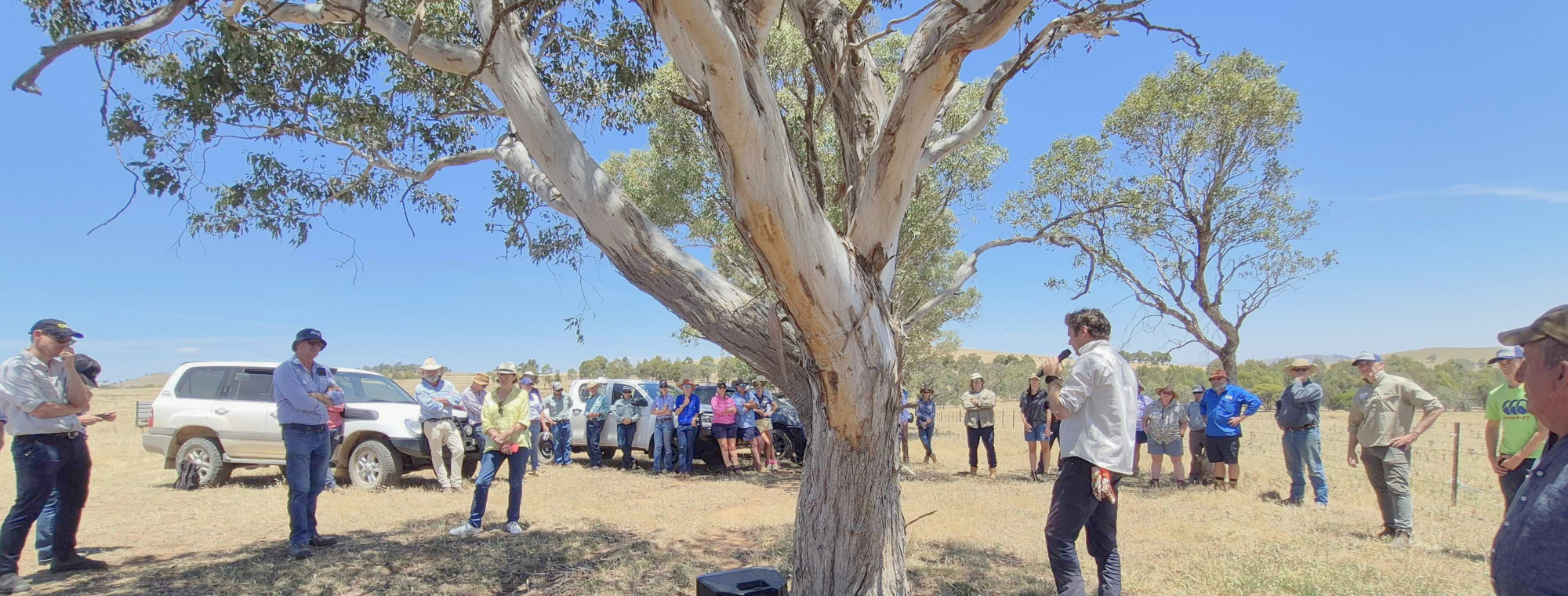
After the morning session, the group headed out onto the property for a hands-on look at the principles discussed in the shed.
.png)
Brock, Hanaminno's farm manager, led the conversation in the paddocks, spending time in the shade talking through the importance of recovery in a grazing system, why it matters, how it works, and the range of practical strategies used at Hanaminno to build it into their management.
Central to Brock's approach is staying ahead of the curve on feed supply versus demand. Each month, a feed inventory is taken using the STAC method: Sole, Toe, Ankle, Calf, to estimate dry matter on hand. When viewed alongside historical grazing data and rolling rainfall, this gives the team a clear read on whether they're in reasonable equilibrium between stocking rate and carrying capacity, or running ahead or behind. Despite heading into summer, their recent rainfall and strong dry matter position had them considering bringing on additional livestock.
.png)
Strategies for building recovery into the system included the use of temporary fencing and merging mobs to ensure paddocks receive the rest they need before being grazed again. The key principle is simple but easy to overlook: the plants need to be ready for it. If they're not, you're managing a system in decline.
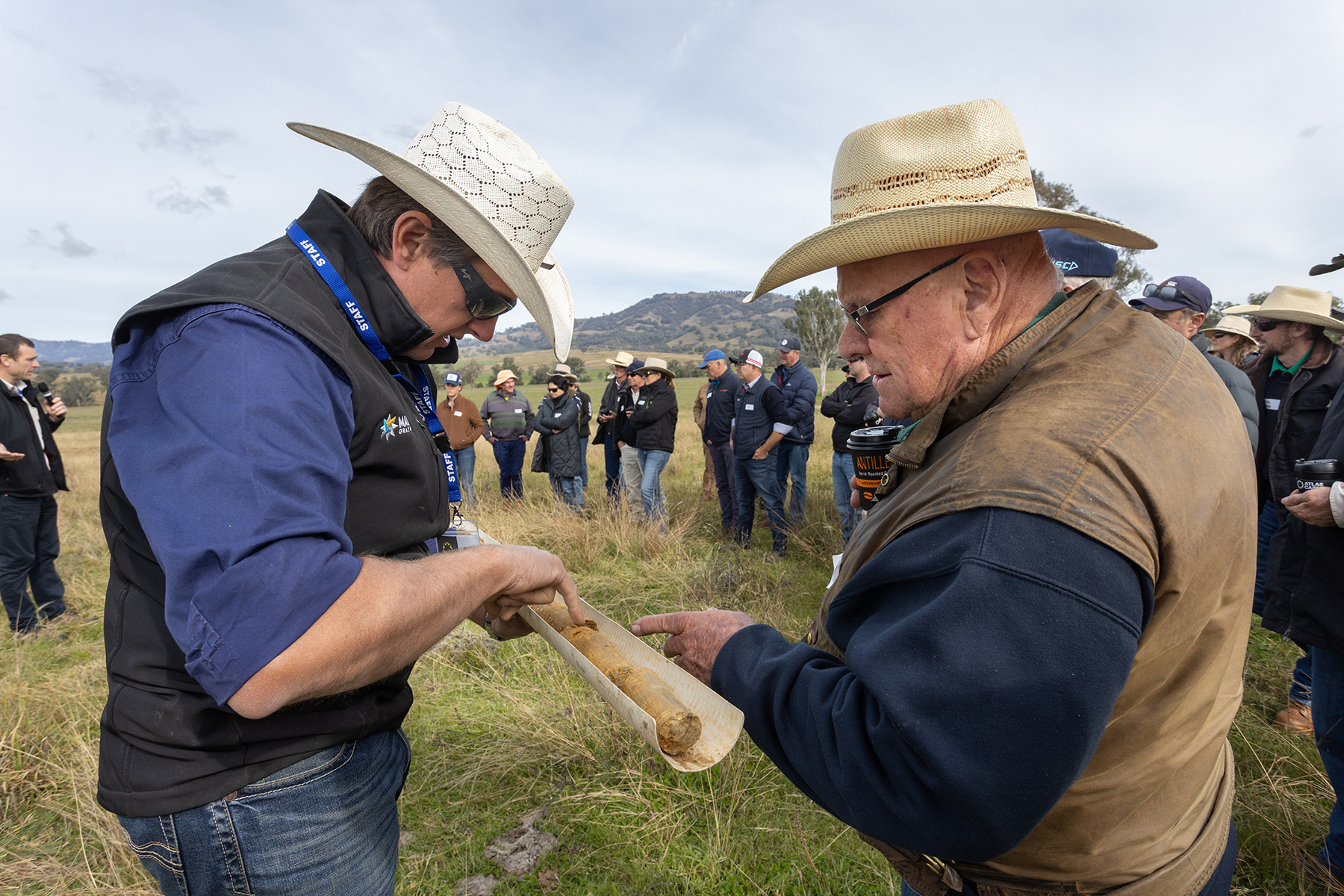
The paddock walk included an ex-cultivation paddock and country sown to perennial pasture around 30 years ago. Two soil cores were taken to 140cm, one higher in the landscape with lower perennial species diversity, and one lower with high perenniality. Atlas Carbon's Senior Pasture and Grazing Consultant, Rafe Ritchie, walked the group through the sampling process and highlighted what to look for in the soil profile: structure, living fibrous roots at depth, and the signs of soil health that indicate movement in the right direction, the kind of movement that translates to higher sequestered and retained carbon over time.
The questions and engagement from the group throughout were excellent, and the day wrapped up out in the paddock, where it felt most fitting. Refreshments were enjoyed back at the shed.
Reflections
The Hanaminno field day reinforced what has become a consistent theme across this series: soil carbon outcomes are a by-product of good grazing management. Charlie and Brock's story is one of long-term thinking, careful observation, and a willingness to treat the land as an active partner in the business, not a cost to be managed.
For producers considering a soil carbon project, the message is clear: do the due diligence, focus on production, and think in decades rather than seasons.
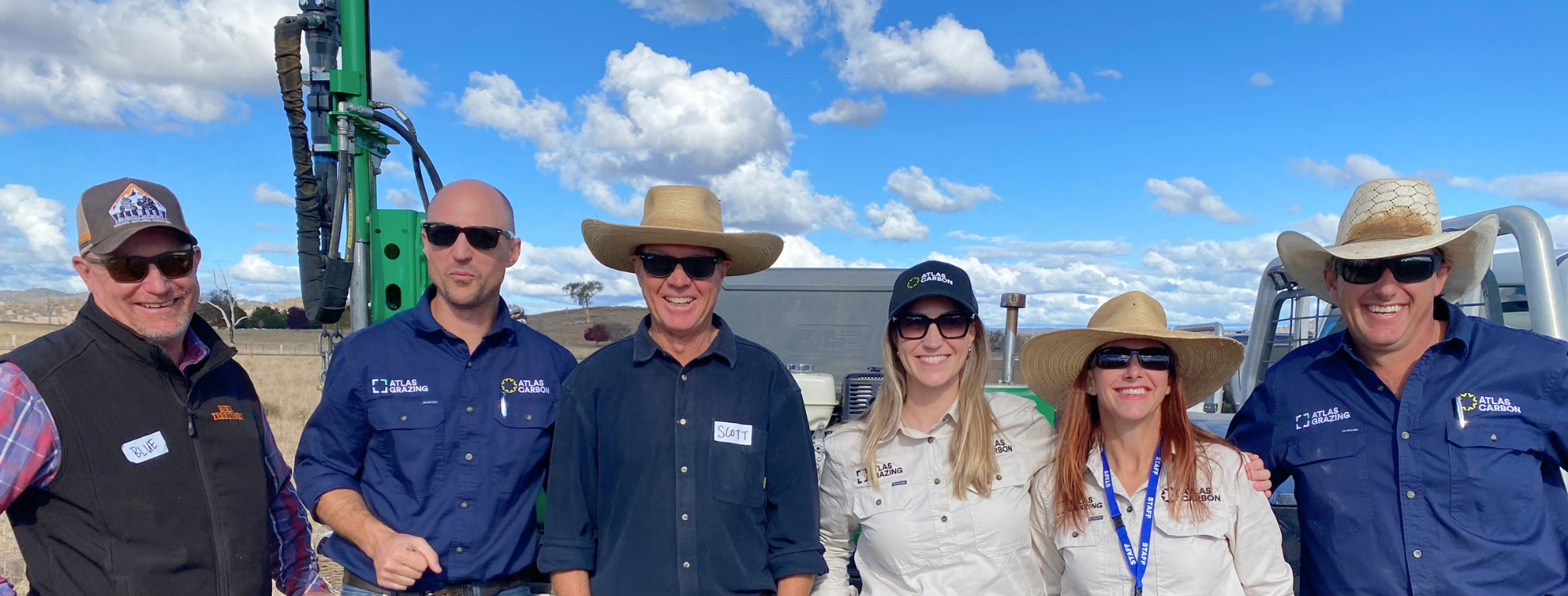
Thank you to the Hanaminno team for opening their property and sharing so generously with the group.
.png)
More resources:
.png)


.png)


