Field Day at 'Bokhara Plains'


Meet the Hosts: Graham and Cathy Finlayson
Graham and Cathy Finlayson own and manage Bokhara Plains. Since acquiring the 9,300ha property in 1999, the Finlaysons have transformed severely degraded claypan country into a resilient, productive landscape using regenerative grazing, planned rest, and large-scale water and fencing infrastructure. Operating in a low-rainfall zone (~380 mm annually), they’ve built a flexible and versatile business, including agistment, cattle trading, and eco-tourism.
Known for their practical leadership and willingness to share hard-earned insights, Graham and Cathy are recognised as innovators in rangeland management and champions of landscape-scale regeneration.
The Finlaysons are long-term MaiaGrazing customers and have now commenced a soil carbon project with Atlas Carbon, registered with the Clean Energy Regulator in 2025.
The field day at Bokhara Plains was supported by the NSW Government’s High Impact Partnership (HIP) program with Atlas Carbon and Wilmot Cattle Company. This program aims to deliver emissions reduction and promote sustainable land management practices in agriculture to support NSW’s net-zero target.
Event Recap: Bokhara Plains Field Day
On the 17th of November in remote NSW rangeland country, the Finlaysons delivered what can only be described as a grazing masterclass at our fourth HIP Soil Carbon field day.
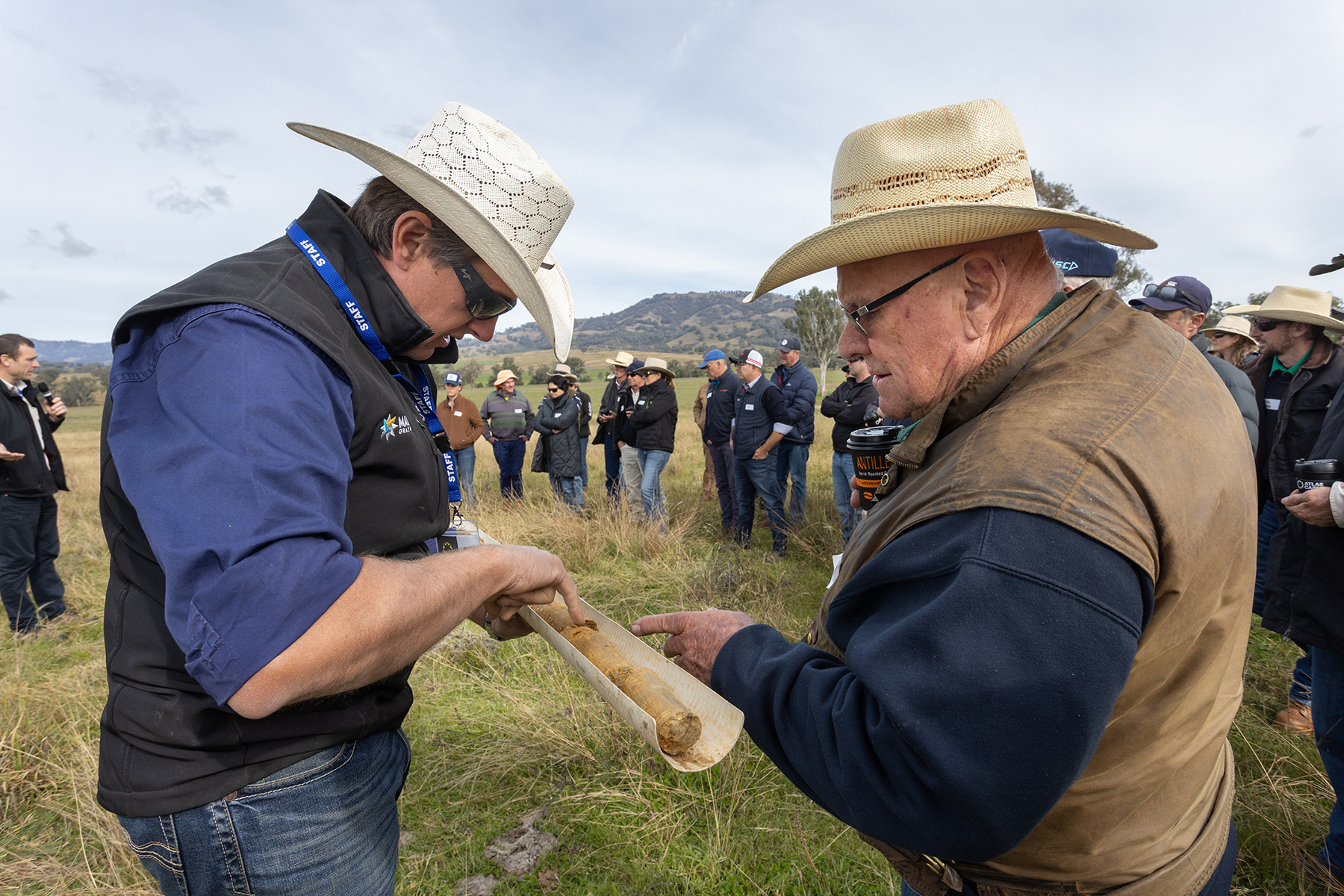
Around 30 producers made the trip to ‘Bokhara Plains’, a fantastic turnout considering the remote location of the property.
The day featured robust discussion around the diversity of landscapes suitable for soil carbon projects, with a major focus on repairing country through strategic grazing, rest, and targeted investment in infrastructure and education.
Graham shared the Bokhara story, from the early days, when bare claypans dominated the landscape, to the pastures visible today, a sight we all took in as we walked the paddocks later in the day.

A highlight was Graham’s explanation of their grazing approach, built on long recovery periods
“The average recovery period of a paddock here is 300 days.”

He went on to note that every hectare grazed at Bokhara effectively produces the district’s annual average yield on a per-hectare basis, because of the way they harvest a year’s worth of growth in a single, deliberate grazing event, followed by extended rest.
“If it’s only being grazed once a year, it means I’m taking out a year’s worth of harvest — a year’s worth of grass, a year’s worth of yield — in a short period of time, and then giving it a long recovery period, maybe even a full year.”
This approach allows plants to fully recover and thrive. Without it, Graham reflected, they would still be looking at bare claypan today.
Atlas Carbon’s Bart Davidson summed up the transformation beautifully in a recent webinar:
“You know, that was the fascinating and absolutely beautiful thing for me to see — Old Man's saltbush popping up as seedling recruits that were not sown, that were not put there by man. They were put there by animal impact and time, and patience, whilst still having a solid stocking rate.”

Attendees were struck by the simplicity the Finlaysons have built into their operations over time.
“Graham and family have dramatically simplified the process, more than anywhere else I’ve seen. They’ve created the capacity to choose — wherever they look, there’s feed in front of them, and they can decide exactly where animals go.” - Bart
As the field day wrapped up, most guests returned to the house for refreshments, while others participated in a practical workshop on grazing management principles and graze planning using the MaiaGrazing platform
The Finlaysons are true landscape leaders. Innovative, insightful, collaborative, and a pleasure to work alongside.

Want to learn more about Bokhara Plains?
.png)


.png)


