Understanding the Basics of Carbon Sequestration


Carbon sequestration is a phrase that gets used often across agriculture, environmental policy, and conversations about the future of farming. Many producers hear it when learning about soil health, grazing practices, carbon credits or soil carbon projects. Others come across it in discussions about farm resilience, drought preparation or improving land condition. No matter where it appears, the idea behind carbon sequestration is simple. It is about capturing carbon dioxide from the air and storing it in a stable form, usually in plants or soils.

Even though the science behind carbon sequestration is detailed, understanding the basics does not need to feel overwhelming. At its heart, carbon sequestration builds on what plants and soils already do naturally. When producers manage land in a way that strengthens those natural processes, they can improve pasture performance, build resilience and support long-term productivity.
This guide aims to make carbon sequestration practical and accessible. It explains how the process works, how grazing affects soil carbon, why carbon projects are gaining attention and how producers can use carbon sequestration to support better outcomes for their business and their land. We'll talk through the science, the real-world applications, and the opportunities ahead for Australian graziers.
What Carbon Sequestration Really Means
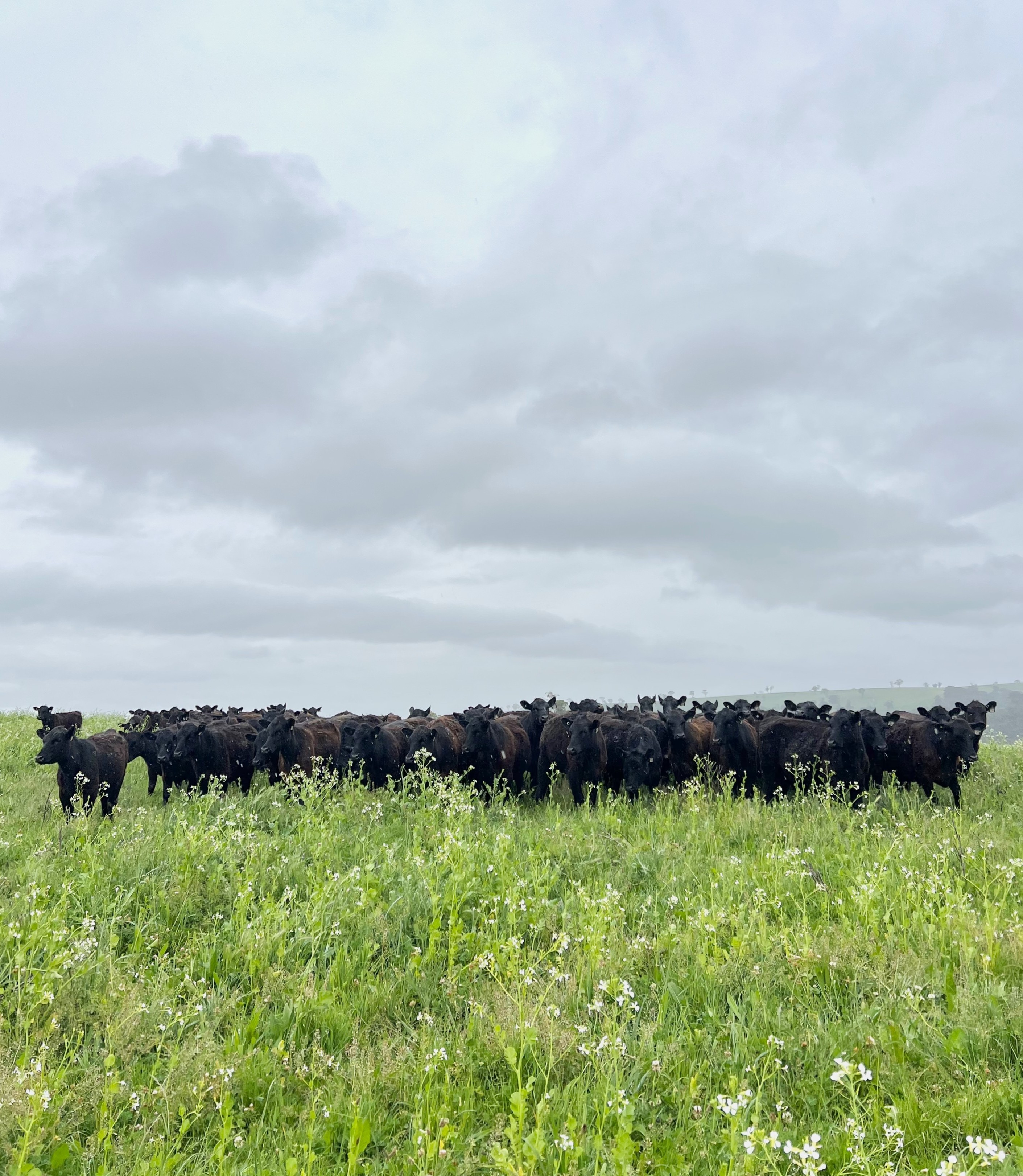
Carbon sequestration is the capture and storage of carbon dioxide (CO₂). When CO₂ accumulates in the atmosphere, it contributes to increased temperatures and weather variability. Plants and soils, however, have the natural ability to remove CO₂ from the air through photosynthesis. Plants absorb carbon dioxide, turn it into carbohydrates and use that energy to grow. Some of this carbon becomes part of the roots, leaves and stems. Some moves into the soil and becomes part of the soil’s organic matter.
When soil organic matter increases, the land becomes healthier. Soil with more carbon holds more moisture, cycles nutrients more efficiently, resists erosion and recovers faster after stress. These benefits directly support better grazing outcomes. In other words, carbon sequestration is not just an environmental process. It is also a pathway to stronger pasture production and more resilient agricultural systems.
Carbon sequestration happens in two main ways. Biological sequestration takes place in plants, soils, wetlands, oceans and forests. Geological sequestration uses underground formations to store captured CO₂ from industrial processes. While both matter at a global scale, producers have the most influence over biological sequestration.
Why Carbon Sequestration Matters for Producers
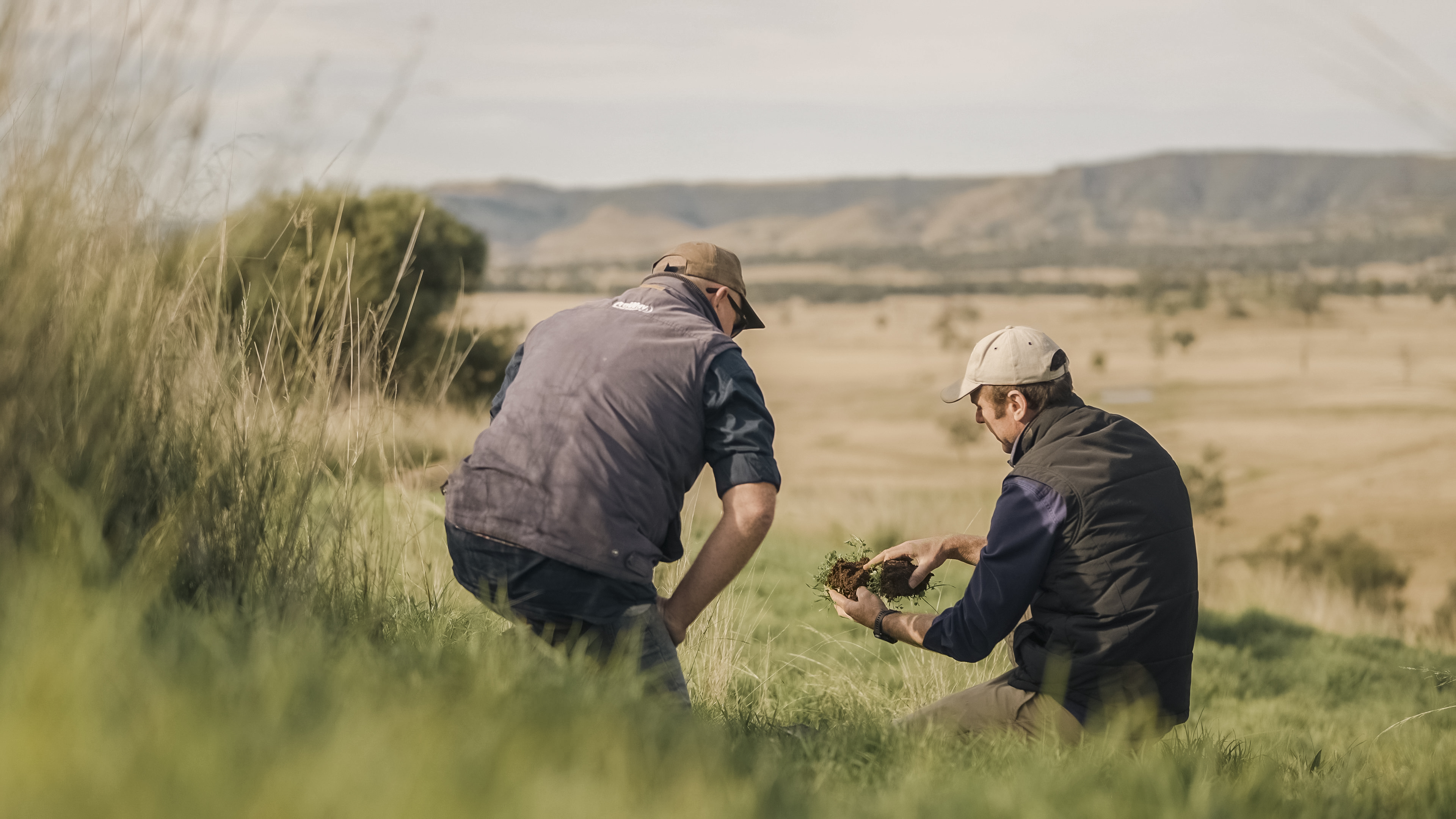
Many explanations of carbon sequestration focus on global benefits. Those are important, but for most producers, the more immediate question is what carbon sequestration means for the land under their care. Soil carbon and pasture health are closely linked. When soil carbon levels rise, soils become darker, richer and better structured. Roots grow deeper, microbial activity increases, and water infiltration improves. These changes allow paddocks to produce more grass, even in tough years.

Improving soil carbon also supports financial resilience. When pastures hold up better in variable seasons, producers rely less on supplementary feeding and experience fewer forced destocking events. A soil that holds water more effectively reduces the shock of dry spells. A soil with a stronger structure is less prone to erosion. Higher available nutrient levels within the soil mean less fertiliser input. All of these benefits show up in the business in ways that matter.
Soil carbon is also the foundation of soil carbon projects. These projects measure and verify improvements in soil carbon levels. If the gains meet specific criteria, producers may earn carbon credits that can be sold. Carbon credits represent a tonne of carbon dioxide that has been stored or avoided. Soil carbon projects make it possible to turn improved land management into an income stream. The key point is that producers do not have to choose between productivity and participation. Many of the practices that lift soil carbon also lift day-to-day performance.
The Natural Carbon Cycle: A Simple Explanation
The natural carbon cycle describes the path carbon takes as it moves through plants, soils and the atmosphere. The basic cycle is straightforward:
- Plants take in carbon dioxide from the air during photosynthesis.
- A portion of that carbon is converted into sugars and used to grow leaves, stems and roots.
- Growing roots release carbon into the soil.
- Roots and plant matter decompose into carbon-rich soil organic matter.
- Soil microbes feed on carbon and lock it in the soil.
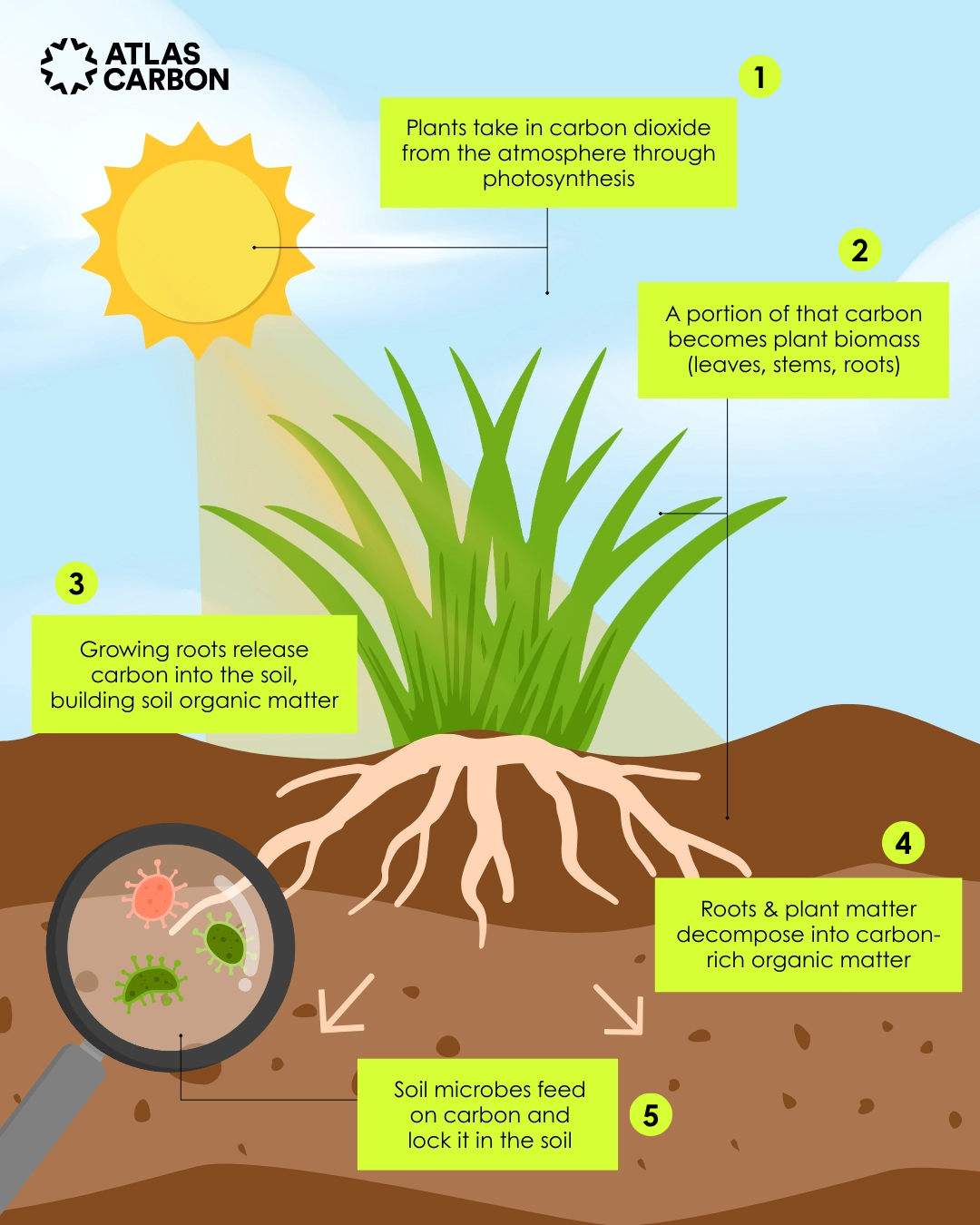
Soils that accumulate carbon more quickly than they lose it experience a net gain in soil carbon. This is what producers aim for when adopting carbon-building practices. Maintaining ground cover, allowing plants to recover and preventing erosion all help protect carbon gains.
Healthy soils also protect carbon from being lost. When soils are disturbed frequently or suffer from bare patches, erosion or compaction, carbon can be released back into the atmosphere. That is why grazing management is a powerful tool. It influences ground cover, root growth and biological activity, which are the engines of carbon storage.
Biological Carbon Sequestration: Nature’s Storage System
Forests

Trees are efficient carbon sinks. They store carbon in their trunks, branches and roots, and they stabilise surrounding soils. Forests accumulate carbon both above and below ground, and can remove significant CO₂ from the atmosphere.
Wetlands
Wetlands store carbon in waterlogged soils rich in organic matter. Decomposition happens slowly in wetlands, allowing large amounts of carbon to build up. Preserving wetlands protects these long-term stores.
Grasslands and Rangelands

Grasslands store most of their carbon below ground in roots and soil. This is why grazing regions have enormous potential for carbon sequestration. Perennial grasses, when managed well, can increase soil carbon steadily over time.
Oceans
Oceans absorb roughly a quarter of global CO₂ emissions. Marine organisms capture carbon and transport it to deeper waters. While not directly managed by producers, protecting marine ecosystems helps maintain this global carbon store.
Agricultural Soils

For livestock and mixed-farming enterprises, soil carbon sequestration is the most relevant form of biological sequestration. Soils act as long-term carbon stores, and producers can influence soil carbon levels through pasture management, cover cropping, reduced tillage and organic amendments. When soil carbon increases, the farm’s overall productivity and resilience increase with it.
Geological Carbon Sequestration
Geological sequestration stores CO₂ in deep underground formations. It involves capturing carbon dioxide from industrial emissions, compressing it and injecting it into rock layers. While effective at large scale, it requires major infrastructure and is less relevant to agriculture. Still, it is part of the broader carbon management landscape and complements biological approaches.
Grazing Management: One of the Most Important Factors in Soil Carbon
Grazing management plays a significant role in carbon sequestration because it directly affects plant growth, root development and ground cover. Healthy pastures with vigorous root systems are the backbone of soil carbon accumulation.
Preventing Overgrazing
Overgrazing weakens pastures, causing shallow roots and exposed soil. This reduces carbon inputs and increases the risk of erosion. Managed grazing protects plant health and soil structure.
Supporting Plant Recovery
Rotational grazing allows plants to rest and rebuild root reserves. Deeper roots supply more carbon to the soil and support stronger water uptake.
Increasing Root Biomass
The majority of carbon stored in grassland soils comes from root turnover. Practices that encourage deep, dense root systems increase soil carbon.
Enhancing Biodiversity
Pastures with multiple species add carbon at different soil depths. They also create a more resilient ecosystem, better equipped to handle weather extremes.
Matching Stocking Rates to Carrying Capacity

Stocking decisions influence ground cover. When grazing pressure matches pasture availability, plants maintain the vigour needed to drive soil carbon sequestration.
Grazing is often viewed as a pressure on the land, but well-managed grazing is a powerful land-repair tool. It supports the soil’s natural ability to store carbon and creates productivity gains that flow through to livestock performance.
Soil Carbon Projects and How They Work
Soil carbon projects create a structured pathway for producers to measure and monetise increases in soil carbon. These projects operate under government-approved methodologies. When soil carbon levels rise beyond a measured baseline, the additional carbon stored may generate carbon credits.
What Soil Carbon Projects Aim to Do
- Improve soil health
- Increase productivity
- Reward producers for good land stewardship
- Build long-term resilience
- Support national greenhouse reduction targets
Practices Commonly Used
- Rotational grazing
- Pasture renovation
- Cover cropping
- Reduced or no tillage
- Targeted application of nutrient, compost or biochar
These practices work together to build soil organic matter. Unlike short-term interventions, soil carbon improvements typically happen slowly over time, which makes ongoing monitoring important.

The Value of Carbon Credits
Carbon credits provide a financial incentive for storing carbon. They create a revenue stream that sits alongside the livestock enterprise. For many producers, the decision to explore soil carbon projects starts with understanding the practical, on-ground benefits. The credits are an additional bonus.
Cover Cropping, No Till and Organic Amendments
Cover Cropping
Cover crops create living roots during off-seasons, improving soil structure, feeding soil biology and suppressing weeds. They protect soil from erosion and add organic material that builds carbon.
No Till
No-till systems reduce disturbance, preserve soil structure and prevent carbon loss. They also help retain moisture and support biological activity.
Organic Amendments
Compost, manure and biochar increase soil organic carbon and feed microbial life. They improve soil fertility and help soils store carbon more effectively.
Together, these approaches form a suite of strategies that support long-term soil improvement.
The Role of Data in Supporting Carbon Sequestration

Data helps producers make informed decisions. When grazing data, soil testing results and pasture monitoring are combined, patterns become clearer.
Data helps answer important questions:
- Which paddocks recover fastest
- Where ground cover is vulnerable
- How stocking pressure influences root growth
- How soil carbon levels change over time
Data also supports adaptive management. Rather than relying on guesswork, producers can see how the land responds to certain practices. This improves both grazing outcomes and carbon outcomes.
A Practical Example: Atlas Carbon
Atlas Carbon works with producers to explore, assess and manage soil carbon projects. Their approach combines practical grazing knowledge, field experience and data tools that help producers understand their land’s potential.
Our guiding principles include:
- Only taking on projects that make sense for the land
- Providing clear, transparent insight into opportunities
- Supporting producers from baseline measurement through credit issuance
- Ensuring the work enhances soil health and productivity
Soil carbon projects succeed best when grounded in practical grazing management that supports long-term land condition.
Looking Ahead: The Future of Carbon Sequestration in Agriculture
Carbon sequestration will continue to grow in importance. Producers who understand how it works will be well-positioned to make decisions that strengthen their land and business. With advancements in soil measurement, mapping and digital planning, participating in soil carbon projects is becoming more accessible.
Carbon sequestration is not only about storing carbon. It is about rebuilding the soil so it can support productive farming for decades to come. The most successful producers will be those who view soil carbon as part of a broader resilience strategy.
A Path Forward for Producers
The best way to begin is to understand the carbon potential of your land. Every soil profile, rainfall pattern and grazing system influences how much carbon a soil can store.
A clear cost-benefit report can help producers see:
- Whether soil carbon projects may be worth exploring
- How grazing practices influence soil carbon
- The financial potential of carbon credits
- The long-term land management benefits
Producers remain in full control of their decisions.
Good information simply helps those decisions become easier and more confident.
Get your free Cost Benefit Report now
.png)
Get the latest
Subscribe to our newsletter.
Listen the latest ep
Of Stockyard Sessions


.png)
.png)
.png)


